Trilab DeltiQ 2 Reviews: See Why 0 Shoppers Rated It 0 Stars!
It’s not just hype. The Trilab DeltiQ 2 3d printer earned its 0/5 from 0 real users. But what’s behind those stars?
 Supermod
 Moderator
 Recaptor
Trilab DeltiQ 2 3D Printer Review: Precision Meets Professional Reliability
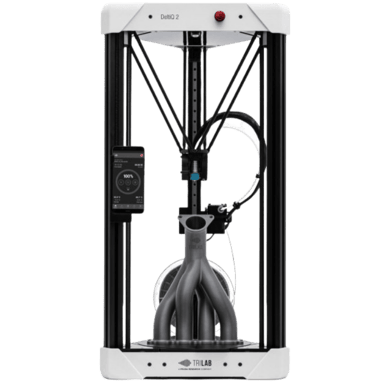
When diving into the professional-grade 3D printer landscape, the Trilab DeltiQ 2 emerges as a noteworthy contender designed specifically for intricate applications in engineering, prototyping, and medical fields. Tailored for professional users, this prebuilt printer combines robust build quality with advanced features that aim to meet the demands of an industrial and educational environment alike.
From its comprehensive specifications, the DeltiQ 2 seems to strike a balance between versatility and precision, offering more than just the basics expected from an FDM/FFF technology unit introduced in 2019. But does this machine truly deliver when measured against its claims? Let's explore its specifications and foreseeable performance to reveal what users can expect from this Polish-engineered device.
Detailed Specs & Features
On paper, the Trilab DeltiQ 2 presents a well-rounded feature set that promises both mechanical accuracy and user-oriented functionality. It operates with an internal power supply voltage ranging from 100 to 240 volts, which ensures compatibility with global electrical standards and reliable energy delivery. The printer's delta-style frame facilitates rapid movements and consistent high-speed printing within a build volume of 3598 cubic centimeters, an advantageous capacity for printing sizeable prototypes. Users benefit from a fine layer resolution of a minimum of 50 microns, which delivers a commendable detail level critical in professional model making.
Among other specs, the device supports a range of filament types like PLA, ABS, PETG, Nylon, TPU, PVA, and PACF, reinforcing compatibility with a broad spectrum of materials, including biocompatible varieties; a feature that stands out in medical prototyping. Filament handling is also optimized by an automatic filament auto-loading system, easing setup time. While it does not support multi-material printing, its upgrade path promises future flexibility with optional mod kits like multi-material extrusions and camera integrations, showing foresight in long-term adaptability.
Furthermore, the presence of a 5-inch touchscreen display alongside remote monitoring and cloud-based software integration underscores the printer's focus on seamless workflow management. The ability to connect via USB, Wi-Fi, or LAN and support various slicers and file formats enhances ease of use across professional settings. Overall, the specs reveal a machine engineered with precision, adaptability, and user convenience in mind, all certified under CE and RoHS safety standards to ensure reliable and compliant operation.
User Experience & Performance (Based on Specs)
Design & Build
The delta-type frame construction is a key differentiator in the design, offering lightweight agility and superior print speed potential compared to traditional Cartesian designs. At 22 kilograms, it balances portability with a sturdy build, and its dimensions compactly fit into professional workspaces with a footprint described as requiring just 2.5 square feet of space. Notably, the print bed incorporates features like a PEI-coated spring steel sheet surface, which is removable and promotes excellent print adhesion without the hassle of surface preparation. Auto bed leveling further ensures that users do not need to calibrate before every job, increasing throughput and accuracy manually.
Performance
Based on its engineering data, the printer reaches an official maximum print speed of up to 300 mm/s, although the measured effective speed hovers around 200 mm/s; still swift for standard professional uses. This speed, combined with a print accuracy of approximately 50 microns, points to a device well-equipped to deliver high-quality outputs rapidly. The 572°C maximum extruder temperature extends its material compatibility, especially for tough or high-temperature filaments like Nylon and PACF. Print recovery and filament runout sensor capabilities also highlight its reliability during extended print runs, which can last up to 72 continuous hours.
Connectivity & Software
The printer's connectivity options are comprehensive: USB, Wi-Fi, and LAN provide flexible ways to manage print jobs in different environments. Its integration with popular slicers like Cura and Simplify3D and support for diverse file formats assure wide accessibility and compatibility. Cloud-based software and multi-printer fleet control cater especially to institutions or businesses managing several units simultaneously. Everyone from educators to industrial operators can thus maintain efficiency and collaboration with real-time monitoring, remote firmware updates, and mobile app support.
Extra Features
The Trilab DeltiQ 2's commitment to user safety shines through with an emergency stop button, overheat protection, and automatic shutdown on error, complying fully with advanced safety requirements. Though it lacks an enclosure, the internal chamber lighting and vibration compensation provide enhanced usability and print stability. Maintenance-wise, tool-free upkeep and self-diagnostics coupled with a 500-hour service interval foster low downtime and long-term reliability. The printer responsibly includes predictive maintenance reminders but falls short on predictive alerts or advanced analytics, which slightly limits proactive servicing.
Pros & Cons
Pros
- Impressive build volume and high precision, suitable for detailed prototyping
- Robust safety certifications and multiple advanced safety features
- Excellent material compatibility, including biocompatible filaments
- Wide connectivity options and cloud-based management ease workflow integration
- User-friendly features like automatic bed leveling and filament auto-loading
Cons
- Lacks multi-material printing out of the box, requiring upgrades for added versatility
- No chamber heating or enclosure, which could limit some specialized applications
- Absence of advanced predictive maintenance features could increase downtime risks
Price & Value For Money
Offered at about $3259 at MatterHackers, the Trilab DeltiQ 2 positions itself in a competitive niche among professional printers. Given its 1-year warranty and high-end features such as a robust build volume and extensive filament compatibility, the price point feels justified for users who prioritize reliability and precision.
Compared to alternatives, it offers solid construction and a thoughtful balance of hardware and connectivity. However, those seeking immediate multi-material capabilities or heated enclosures might find better fits elsewhere or consider planned upgrades. This printer is a sensible investment if your workflow benefits from automation, remote monitoring, and broad technical support.
Quick Take
In short, the Trilab DeltiQ 2 harnesses precision engineering and professional-grade material support to serve advanced prototyping needs efficiently. If we look at the numbers alone, its fast printing speeds, careful safety certifications, and smart design reflect a printer built for serious, demanding applications. That said, its lack of multi-material printing by default and enclosure might temper appeal for highly specialized additive manufacturing.
Closing Recommendation
The Trilab DeltiQ 2 may be ideal for professional users in education, medicine, and engineering who require consistent accuracy and versatility across a variety of materials. Its emphasis on user safety, remote fleet control, and advanced features makes it especially valuable for institutions. However, those needing out-of-the-box multi-material workflows or enclosed heated chambers may want to anticipate additional investments or explore other models. Overall, this printer helps users achieve a productive balance between speed, quality, and operational control supported by well-documented specifications and industry certifications.
Verdict
Rating: Based on the specifications and overall feature set, we believe Trilab DeltiQ 2 deserves 4.3 out of 5.
- Winner Feature => Strong precision and professional material compatibility with advanced connectivity.
- Needs Improvement => Multi-material printing capabilities and enclosure options could be enhanced.
Reviews 0
The good, the bad, and the brutally honest.Average Rating


More 3D Printers 453
Unlock more awesome finds.